
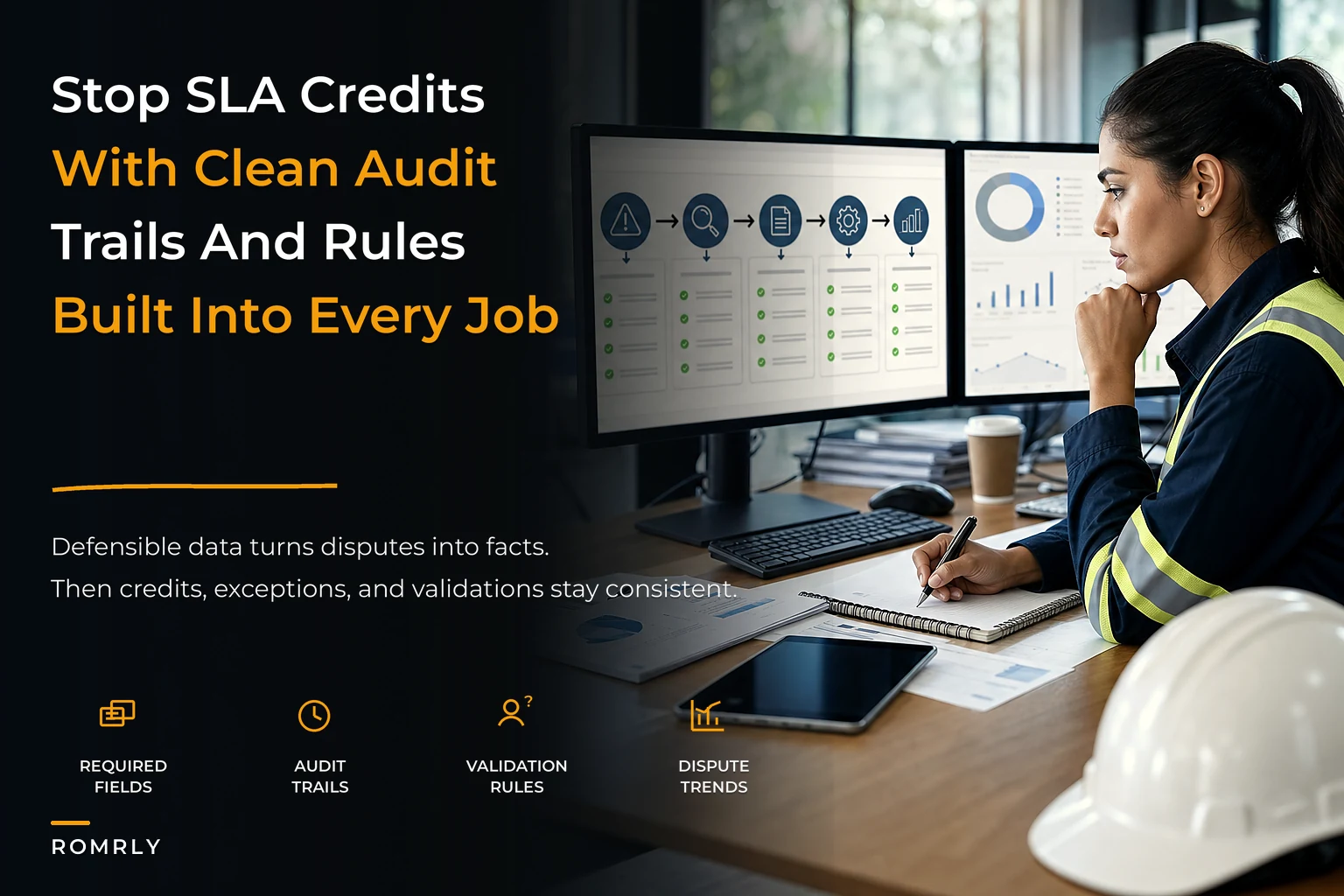

Three months ago, a commercial HVAC company in Phoenix lost $47,000 in SLA credits to their largest hospital client. Not because they missed response times. Not because equipment stayed down. They lost it because they couldn't prove what actually happened during service calls.
The client disputed 14 emergency calls from Q3, claiming response times exceeded the 2-hour window. The field service manager knew they'd hit those windows—dispatchers had notes, technicians remembered the calls. But when the quarterly review came, there were gaps everywhere. Technician arrival times showed in one system, completion times in another. Parts usage lived in handwritten forms. No consistent job schema meant different techs logged different data. The dispute dragged on six weeks before they gave up and ate the penalties.
This happens constantly in field service. Not dramatic failures where equipment stays broken for days. Just steady losses from data governance problems that make SLA compliance impossible to defend. Companies hit their service targets and lose the credits anyway.
Why field service operations leak money through data gaps
Field service businesses track operational data across disconnected systems. Dispatch software shows one version of events. Mobile apps capture different fields. Parts tracking lives somewhere else. Customer systems have their own requirements. Each technician develops personal shortcuts.
A regional elevator service company ran into this after losing around $8,500 monthly in disputed maintenance credits. They maintained 180 elevators across office buildings with strict uptime requirements. Technicians completed preventive maintenance on schedule, emergency repairs within SLA windows. Property managers still routinely disputed invoices, claiming missed visits or incomplete work.
The operations manager spent two full days assembling evidence for one disputed invoice. GPS logs from vehicles proved the technician arrived—but arrival time wasn't in the work order. The tech's mobile app showed job completion at 11:47 AM. The customer's system required a specific completion code that wasn't entered. Parts were logged in the inventory system but not linked to the job record. After burning 16 hours on one $3,200 dispute, they gave up.
Most field service operations built their data capture organically. Early systems focused on basic dispatching. Mobile tools got added later. Parts tracking came from accounting needs. Customer portals appeared when clients demanded them. Nobody designed an end-to-end data schema that could actually defend SLA performance.
Scale makes this worse. A 5-tech operation can reconstruct what happened through memory and informal notes. At 50 techs across multiple territories, that falls apart completely. One facility management company with 70 technicians calculated they were losing around $34,000 monthly in disputes they should have won. Their data existed somewhere—just not in a defensible format.
The hidden cost of incomplete job schemas
Field service companies rarely calculate the full cost of weak data governance. The obvious losses from disputed credits are visible. The operational drag isn't.
Eliminate field service chaos with Romrly.
Romrly helps you assign, track, and complete service jobs efficiently and on time.
- Unified job scheduling
- Technician dispatch & tracking
- Customer notifications & updates
No credit card required
Think about what happens during a typical SLA dispute. The customer claims a 4-hour response time violation on an emergency call from Tuesday. Your dispatcher pulls up the job—it shows "completed" but no arrival time. They check the GPS system—the truck was at the site from 2:15 to 4:30 PM. The technician's notes mention replacing a compressor but don't specify which one. Parts records show a compressor was pulled from inventory that day, but it's not linked to this job. The customer's facility manager says nobody signed them in until 3:45 PM.
Now someone spends four hours assembling evidence. They interview the technician, who barely remembers this specific call among dozens that week. They cross-reference vehicle logs with job records. They dig through parts transfers. Even if they win the dispute, they've burned more in labor than the credit was worth.
A medical equipment service company tracked this across 50 disputes in one quarter. They won 30, lost 12, and gave up on 8. Total time spent: 340 hours. Cost of that time: roughly $11,000. Credits recovered: $19,000. Net gain looked like $8,000—except those 340 hours could have gone toward actual operational improvements or new business.
The schema problem runs deeper than missing fields. Different stakeholders need different data views. Technicians think in terms of tasks completed and parts used. Dispatchers care about arrival times and completion status. Parts managers need serial numbers and warranty status. Accounting wants billable hours and contract coverage. Customers demand their specific codes and compliance fields.
Without a unified schema, each group captures what they need and creates parallel, incomplete records of the same job.
Required audit fields that actually matter
After working through hundreds of disputed SLA credits across different industries, certain fields consistently determine whether you can defend your performance. Not the fields your software vendor recommends. Not what seems logical on paper. The fields that matter when a client challenges an invoice.
Critical timestamp fields:
-
Initial request timestamp (not when you created the work order)
-
Acknowledgment timestamp (proving you received and accepted the request)
-
Dispatch timestamp (when technician was assigned)
-
Travel start (when tech actually left previous location)
-
Arrival at site (not estimated, actual)
-
Customer contact (when tech checked in with site contact)
-
Work started (after any waiting for access or safety checks)
-
Work completed (technical completion)
-
Customer sign-off obtained
-
Departure from site
A commercial kitchen repair company added these ten timestamps to their job schema. Previous SLA disputes had been averaging around $6,000 monthly. After three months with complete timestamp capture, disputes dropped to under $1,000 monthly. Service hadn't improved—they could just prove what actually happened.
Parts and equipment fields:
-
Part removed (serial number, condition, disposal method)
-
Part installed (serial number, source, warranty start)
-
Consumables used (quantity, lot numbers for regulated industries)
-
Customer equipment affected (asset ID, downtime start/end)
-
Tools required (for billing special equipment charges)
Work description fields:
-
Problem as reported by customer
-
Problem as diagnosed by technician
-
Root cause determination
-
Work performed (specific tasks, not general categories)
-
Work not performed (and why)
-
Follow-up required
-
Safety issues noted
Authorization and sign-off fields:
-
Customer contact name and role
-
Authorization to proceed (timestamp and method)
-
Change orders approved (if scope expanded)
-
Work completion confirmed by (name and timestamp)
-
Exceptions noted by customer
-
Disputes raised at time of service
A fire suppression service company lost $23,000 in one quarter because technicians marked jobs "complete" without capturing customer sign-off names. The client's procurement department claimed they never authorized the work. Adding a mandatory customer contact field with role verification eliminated those disputes entirely.
Building automated checks that catch problems before disputes
Manual data quality checks don't scale. By the time someone reviews job records, technicians have moved on to other calls, details are forgotten, and fixing gaps becomes nearly impossible.
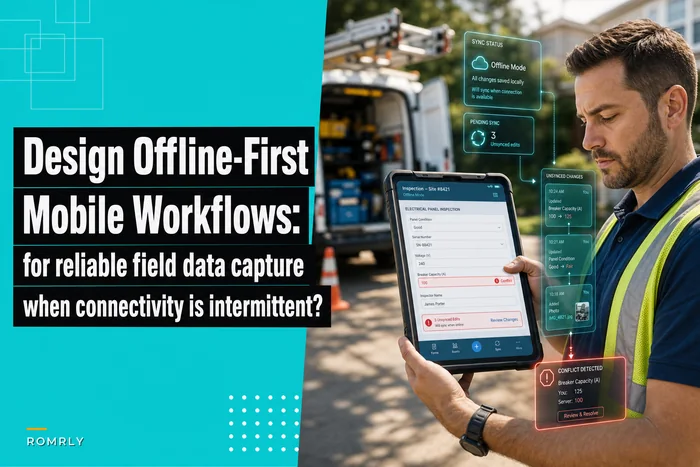
Smart operations build automated validation into their mobile workflows for reliable field data capture. Not complex systems—just logical checks that flag issues while techs are still on site.
Real-time validation rules:
If job type is "emergency" and response SLA is 2 hours, the system checks:
-
Is arrival time within 2 hours of request time?
-
If not, is there a documented reason code?
-
Did customer approve the delay?
If parts were replaced, the system requires:
-
Old part serial number or explanation why not captured
-
New part serial number from approved inventory
-
Photo of installed part (for high-value items)
-
Warranty registration completed
If job status is "complete" but customer sign-off is blank:
-
Block job closure
-
Require override reason
-
Alert dispatcher for follow-up
A commercial refrigeration company implemented 15 automated checks in their mobile app. Monthly disputes had been running around 20 jobs. After automation, that dropped to 3 or 4. More importantly, technicians stopped seeing data capture as bureaucracy—the system walked them through requirements instead of dumping everything on them at the end of the job.
Require photos for high-value part installations to reduce disputes.
Escalation triggers:
Some data gaps need immediate attention. An industrial generator service company built these escalation rules:
-
If arrival time exceeds SLA by 15 minutes
Alert dispatcher immediately
-
If customer refuses sign-off
Notify manager within 10 minutes
-
If parts aren't in system inventory
Flag for parts manager review
-
If work is incomplete due to access issues
Create follow-up job automatically
These aren't sophisticated rules. But catching issues while the technician is still on-site means problems get fixed immediately, not discovered during monthly invoice reviews.
Pattern detection for chronic issues:
Beyond individual job checks, operational software can identify patterns that predict disputes. A facilities maintenance company noticed certain properties always challenged invoices. Analysis showed those sites required specific authorization codes their techs weren't capturing. Adding site-specific field requirements for those locations eliminated most disputes from those properties.
-
Technicians who consistently miss required fields
-
Customers who frequently dispute specific work types
-
Time windows when data quality drops (end of shift, Fridays)
-
Job types with the highest dispute rates
More than that, automation reframes the job for technicians. Instead of a long end-of-day form, the app enforces small checks at the right time.
The incident-audit SOP that transforms disputes into process improvements
Most companies treat SLA disputes as individual firefights. Customer complains, operations scrambles for evidence, finance negotiates, everyone moves on until next month. That reactive cycle guarantees the same problems repeat.
Better operations treat each dispute as a process failure worth investigating. Not blame-seeking—just understanding why the data gap occurred and how to prevent it from happening again.
Phase 1: Immediate Response (Within 2 hours of dispute)
Assign one person as dispute owner—not the technician, not the dispatcher, someone neutral who can investigate objectively. They gather the original service request with all communications, the complete job record across all systems, technician notes and memory from the call, full customer communication history, and any available system logs including GPS, mobile app activity, and inventory pulls. This isn't about winning the dispute yet. It's about preserving evidence while memories are still fresh.
Phase 2: Gap Analysis (Within 24 hours)
The dispute owner documents what data the customer says is missing or incorrect, what data you actually have, why the gap exists, whether this gap has occurred before, and whether your current process should have prevented it. A pest control company found that 60% of their disputes came from the same root cause: technicians selecting "general treatment" instead of specific service codes the customer's system required. One process fix eliminated more than half their monthly disputes.
Phase 3: Response Formation (Within 48 hours)
Based on gap analysis, determine whether you can defend the dispute with existing data, what additional evidence might exist, whether it's worth fighting or better to concede, and what the relationship cost of pushing back hard might be. Not every dispute is worth winning. A security system installer calculated that disputes under $500 cost more to fight than just approve. They built automatic approval for small credits and focused effort on larger ones.
Phase 4: Process Improvement (Within 1 week)
Whether you win or lose, every dispute should trigger a process review. Update the job schema if fields were missing. Add validation rules if data was incorrect. Improve training if the technician made errors. Modify customer setup if requirements were unclear. The dispute becomes documentation of a gap that needs closing.
Phase 5: Pattern Monitoring (Monthly)
Track disputes by customer, technician, service type, root cause, time of month, and resolution outcome. A facilities service company discovered that 40% of disputes came from jobs scheduled in the last week of the month when technicians were rushing to hit quotas. They adjusted scheduling to spread work more evenly and cut disputes by roughly a third.
This SOP looks like overhead until you track what it actually saves. One company ran it across 50 disputes over six months and identified four root causes driving 80% of their issues. Fixing those four process gaps reduced disputes by $18,000 monthly. That's a decent return for what started as an administrative exercise.
Here is a simple visual of the incident-audit workflow.
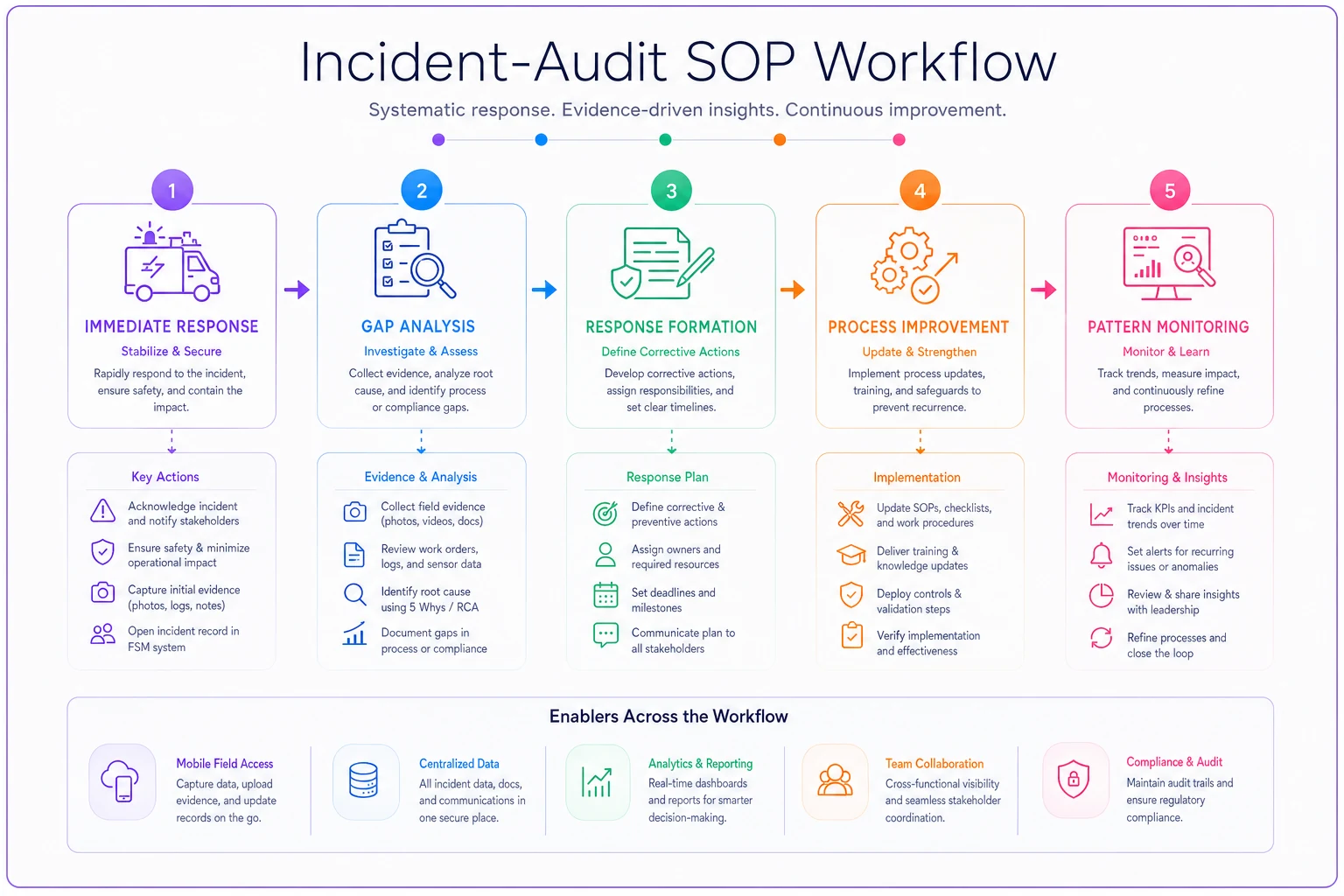
Use the SOP to turn disputes into process improvements and reduce recurring issues instead of repeatedly firefighting them.
Creating defensible evidence packages
When disputes escalate to formal reviews or contract negotiations, you need evidence packages that tell a complete story—not data dumps, but organized documentation that proves SLA compliance.
A data center maintenance company developed this structure after losing a $50,000 annual contract dispute:
Executive Summary (1 page)
-
Job identifier and date
-
SLA requirement
-
Our performance
-
Supporting evidence summary
-
Dispute resolution requested
Chronological Timeline
-
Every touchpoint from request to resolution
-
System timestamps and human activities
-
Parallel activities (travel time while parts were being pulled)
-
Where we exceeded requirements
Supporting Documentation
-
Original service request
-
Work order with all fields
-
Technician notes and photos
-
Parts documentation
-
Customer communications
-
Sign-off records
System Audit Trails
-
Login records showing who updated what
-
GPS tracks with timestamps
-
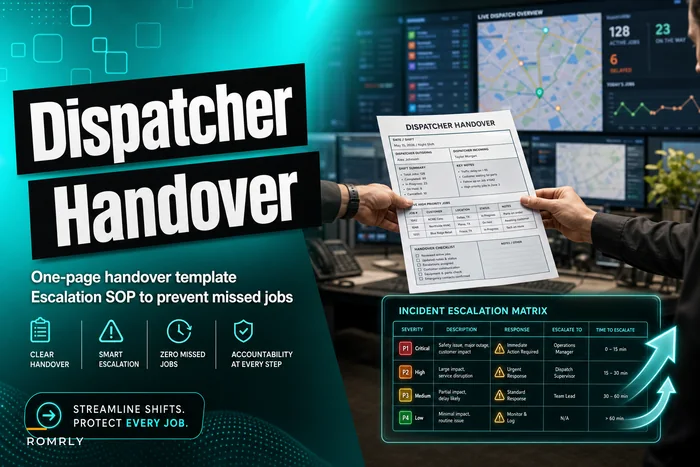
Dispatcher handoff notes if shifts changed mid-job
-
Inventory system pulls
-
Any automated alerts or escalations
Exception Explanations
-
Any deviations from standard process
-
Why certain data might be missing
-
Customer-caused delays
-
External factors (weather, traffic, site access)
This package structure helped them win around 85% of disputes compared to roughly 50% before. More importantly, customers started accepting their documentation without extended back-and-forth, which saved almost as much time as the credits themselves.
The key is building evidence packages before you need them. A mechanical contractor runs automated weekly reports that pre-build evidence packages for every job. When disputes come up, they pull the pre-built package instead of scrambling.
When data governance actually saves your contracts
The real value here isn't winning individual disputes—it's preventing contract losses and changing how clients perceive your operation.
A commercial fire system company with $3M in annual contracts realized this after implementing comprehensive data governance. They'd been losing 2-3 major contracts yearly, usually after too many SLA disputes had piled up. Clients didn't necessarily care about any single incident, but monthly disputes created a perception of unreliability that was hard to shake.
After implementing proper job schemas, automated checks, and dispute SOPs, their dispute rate dropped from 15-20 monthly to 2-3. During quarterly reviews, instead of defending failures, they could show consistent on-time performance, proactive communication when issues did occur, and documentation of process improvements. They hadn't lost a major contract in 18 months when they last shared numbers. The CFO calculated that better data governance saved around $400,000 annually in retained contracts.
An industrial equipment service company took it further. They used their improved data to flip contract renewals entirely—instead of clients questioning SLA performance, they presented quarterly performance packages showing actual response times versus requirements, first-time fix rates by equipment type, preventive maintenance compliance, and parts availability metrics. Three clients actually increased their service agreements based on the proof.
The ROI calculation nobody does
Most companies never add this up properly. They see data governance as a compliance burden instead of a profit center.
Direct costs of poor data governance:
-
Lost SLA credits and penalties
-
Time spent fighting disputes
-
Customer credits given rather than defended
-
Contract losses from accumulated disputes
Indirect costs:
-
Technician time reconstructing job details
-
Management time in dispute meetings
-
Damaged customer relationships
-
Lost upsell opportunities during disputes
A 50-technician mechanical services company ran this calculation:
| Cost Category | Annual Amount |
|---|---|
| Disputed credits (should have won) | $135,000 |
| Time spent on disputes (800 hrs @ $45/hr) | $36,000 |
| One contract lost to SLA disputes | $200,000 |
| Total annual cost | ~$370,000 |
They invested $50,000 in improving data governance—mobile app customization, automated validation rules, process documentation, training, and quarterly audit procedures.
First-year results: disputed credits dropped to $45,000, they won 90% of remaining disputes, and zero contracts were lost to SLA issues. Dispute handling time dropped by 75%. Net savings came out around $280,000 in year one, with ongoing benefits from better operational data compounding after that.
Building your field service data governance roadmap
Companies that try to fix everything at once usually fix nothing. The ones that succeed take a phased approach.
-
Month 1-2
Baseline and prioritize.
Pull dispute data from the last six months. Identify your top five root causes. Calculate what poor data governance actually costs you. This becomes your business case for everything that follows. -
Month 3-4
Design core schema.
Define the minimum viable fields for SLA defense. Don't try to capture everything—focus on fields that matter for your specific contracts. Get input from technicians, dispatchers, and customers. Build consensus before mandating changes. -
Month 5-6
Implement automated checks.
Start with simple validation rules. Arrival time blank? Block job closure. Parts used? Require serial numbers. Basic checks like these catch the majority of problems. Add complexity only after simple rules are working consistently. -
Month 7-8
Deploy dispute SOP.
Train your team on the investigation and response process. Assign clear owners for disputes. Start treating every dispute as a learning opportunity instead of a fire to put out. -
Month 9-10
Build evidence packages.
Create templates for common dispute types. Automate report generation where possible. Train customer-facing teams on using evidence effectively. Start proactively sharing performance reports with clients before they ask. -
Month 11-12
Measure and optimize.
Compare dispute rates to baseline. Calculate ROI. Identify remaining gaps. Plan next-phase improvements.
A national equipment rental company followed this roadmap across 200 technicians in 8 regions. Year one reduced disputes by 70%. By year three, their data governance had become an actual competitive advantage in winning new contracts—something they hadn't anticipated when they started.
Data governance as competitive advantage
Poor field service data governance isn't just an administrative headache—it's a profit leak that compounds quietly. Every disputed SLA credit, every lost contract, every hour spent reconstructing job details drains resources that could be driving growth.
Companies that build solid data governance flip this entirely. They prevent disputes instead of defending against them. They expand contracts instead of just holding onto them. They use operational data to make better decisions instead of surviving monthly invoice reviews.
The path forward isn't complicated. It requires consistent data capture, automated quality checks, and systematic process improvement when things go wrong. Start with one dispute. Investigate it thoroughly. Fix the root cause. Build from there.
Your next disputed SLA credit is either a financial hit you absorb or a prompt to build something better. Most companies just negotiate the credit and move on to the next fire. The ones that don't are the ones still holding those contracts two years from now.
Ready to optimize your field operations?
Join 2,000+ service teams using Romrly to boost productivity, reduce downtime, and enhance customer satisfaction.